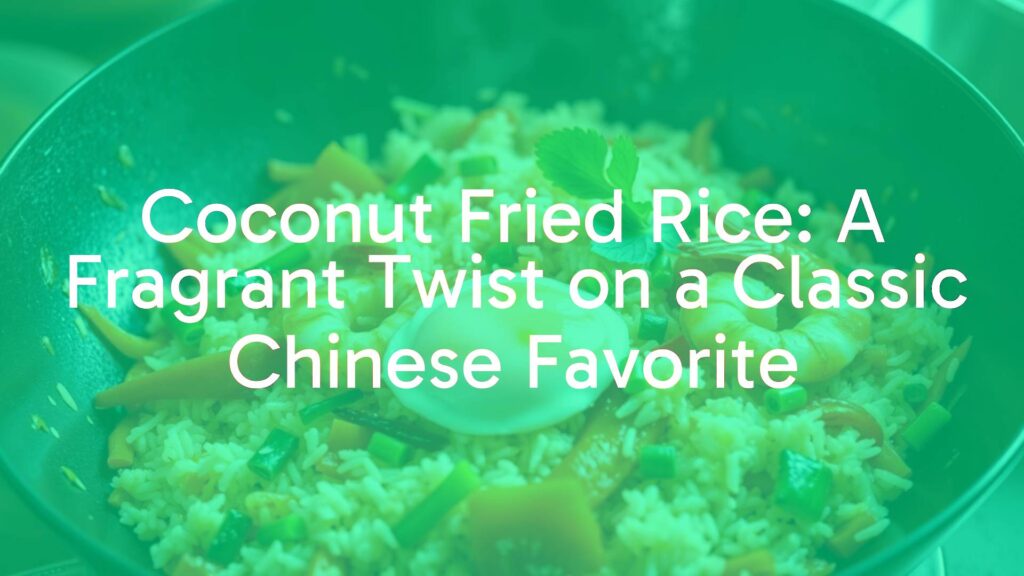
Overview of Coconut Fried Rice
Coconut fried rice is a unique reinterpretation of traditional Chinese fried rice, infusing creamy coconut milk or shredded coconut into the mix to lend an enticing tropical aroma and subtle sweetness. This dish offers a flavorful contrast between the familiar savory notes of classic fried rice and the rich, nutty essence of coconut, making it a standout choice at modern Chinese banquets and family meals alike.
Distinctive Qualities and Preparation Methods
What sets coconut fried rice apart is its aromatic profile and slightly creamy texture. The rice is typically cooked with coconut milk, giving each grain a delicate, fragrant coating. It is then stir-fried with a medley of fresh vegetables, eggs, and sometimes protein such as shrimp or chicken, allowing the natural sweetness of coconut to meld with umami-rich soy sauce and other seasonings. The result is a dish that is both savory and subtly sweet, with a glossy appearance and a comforting, soft bite.
Historical Roots and Regional Significance
Although fried rice has origins tracing back to the Sui Dynasty in China, coconut fried rice is a more contemporary variant that likely became popular in southern Chinese regions where coconuts are plentiful. Hainan and Guangdong provinces, both noted for their use of tropical ingredients, are among areas where this dish might be featured, especially during festive occasions. Its popularity has expanded in recent years, becoming a creative addition to both home-cooked meals and restaurant menus across China and in overseas Chinese communities.
Core Ingredients and Defining Components
Essential to coconut fried rice is the use of coconut milk or, less commonly, freshly grated coconut. Other key components include day-old rice (preferably jasmine or long-grain for optimal texture), a combination of colorful vegetables (such as bell peppers, sweet corn, and peas), aromatics like garlic and ginger, and protein sources like shrimp, chicken, or tofu. A touch of soy sauce or fish sauce adds depth without overpowering the coconut’s subtle sweetness. The result is a beautifully balanced dish that appeals to a wide range of palates.
Popular Variations and Ingredient Adaptations
Many modern chefs and home cooks customize coconut fried rice to suit their preferences. In some versions, pineapple chunks or diced mango are included to further amplify the tropical notes. Nuts such as cashews or peanuts may be sprinkled on top for crunch and extra flavor. For a vegan option, simply omit the eggs and animal proteins, focusing on assorted vegetables and using plant-based alternatives as desired. In settings where coconut milk is unavailable, a combination of coconut cream and water can serve as a reasonable substitute, though this may result in a richer, slightly heavier dish.
Serving Suggestions and Ideal Pairings
Coconut fried rice is most often served as a main course, either on its own or as part of a larger family-style meal. It pairs wonderfully with roasted or grilled meats, tangy stir-fries, or spicy Sichuan dishes, as the mild coconut flavor helps temper bolder tastes. For beverages, jasmine tea or a crisp, floral white wine complement the dish beautifully, while tropical fruit juices can further highlight its exotic character. Garnishing with fresh cilantro, thinly sliced scallions, or a sprinkle of toasted coconut enhances both flavor and presentation.
